AI Sales Rep on a DTC Storefront vs Live Chat Support
AI sales reps handle discovery and cart recovery; live chat handles post-purchase loyalty.
A lot of brand operators have run the same experiment: add a chat widget to the storefront, wait a quarter, and find the conversion numbers barely moved. The usual conclusion is that chat doesn't work, or that the wrong vendor got picked. The real problem sits one level up. Most DTC brands treat the choice between an AI sales rep and live chat support as a single decision, a bake-off between two competitors for the same job, when the two tools are built to solve entirely different problems on a storefront. Picking a winner before defining the job is how a brand ends up with a tool that's well-built and still produces nothing, because it was never asked to do the thing it's good at.
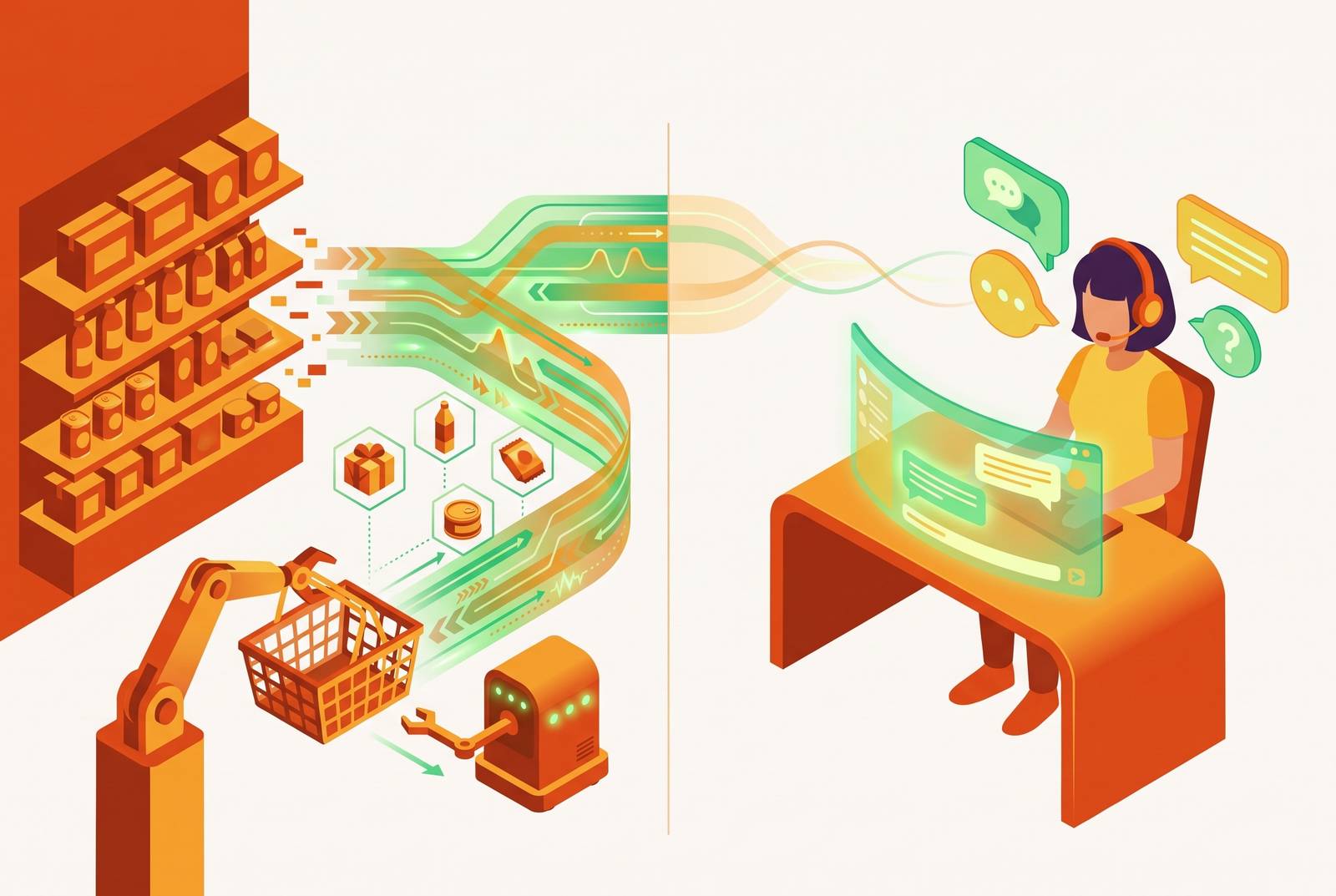
An AI sales rep and live chat support are built for different jobs, and the mismatch between tool and task is why most chat experiments produce nothing. An AI sales rep belongs at the pre-purchase layer: product discovery, sizing and fit questions, cart recovery, and off-hours conversion, all at a cost per conversation far below what a human team runs. Live chat belongs post-purchase, handling returns, disputes, damaged goods, and high-value relationships where a human voice is what keeps the customer loyal. The brands getting the best results run both in sequence, with the AI handling volume and discovery, and the live chat team receiving only the escalations that genuinely need a person.
The decision matters more now because of what's changed upstream of it. AI-driven traffic to Shopify stores has grown sharply since early 2025, and shoppers arriving from ChatGPT, Perplexity, and Google's AI features show up with more purchase intent than traffic from traditional channels. At the same time, the cost of getting a visitor to the storefront in the first place keeps climbing for the average DTC brand. Put those two facts together: the visitor who lands in those thirty seconds is harder to win back and more expensive to replace than at any prior point in the category's history.
The chat category itself has changed in ways that matter just as much. Chatbots used to respond: a shopper typed a question, a script matched it to an answer, and that was the whole interaction. Agents act: they pull live inventory, recover a cart mid-abandon, and guide someone through discovery the way a good floor associate would. A brand that treats a 2026 AI sales agent like the chatbot it replaced is running a 2020 solution against a problem that's already moved past it, and a brand that expects its live chat team to behave like an always-on sales engine is asking a support function to do a conversion function's job. Both mistakes come from the same root: skipping the question of what each tool is actually for.
What an AI sales rep is built to do
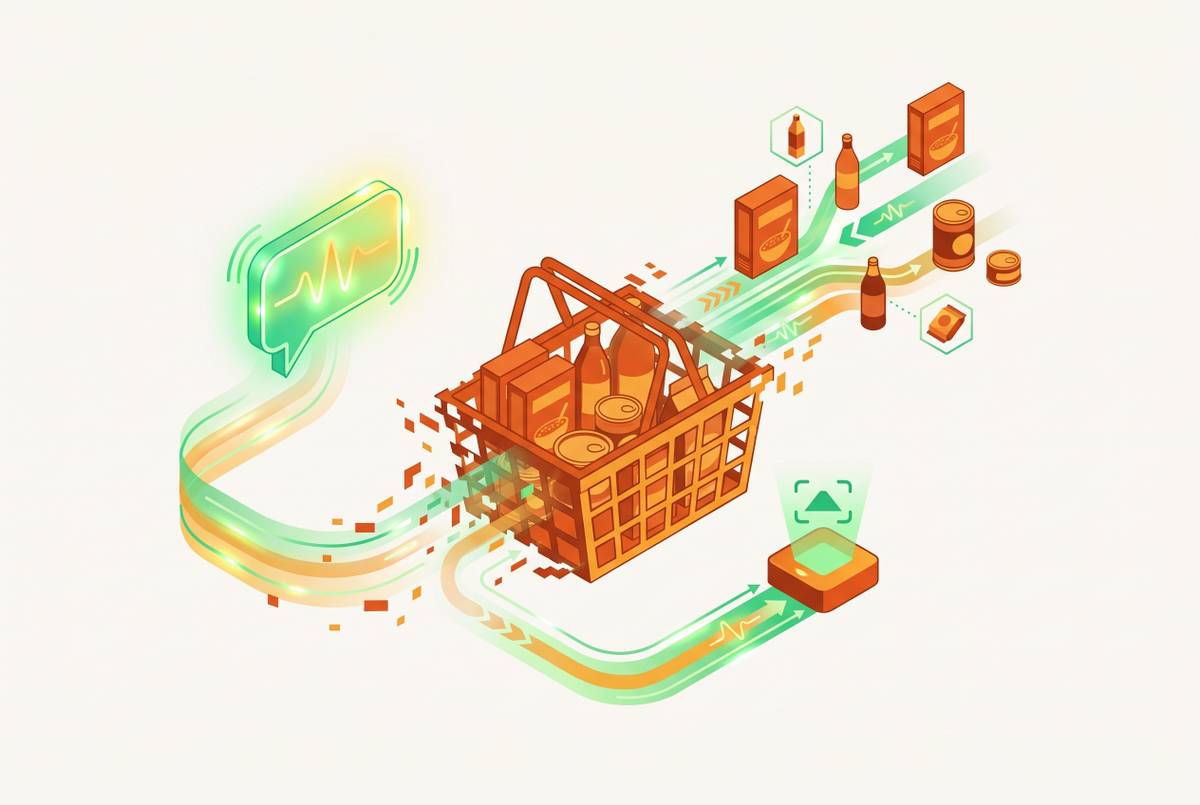
An AI sales rep exists to turn a browser into a buyer. It guides someone through product discovery, answers the pre-purchase questions that would otherwise sit unresolved in a visitor's head, recovers a cart before it's abandoned for good, and personalizes what gets recommended, all in the same window where the shopper is actually deciding whether to buy.
The distance between an agent and a chatbot appears clearly in a single exchange. A shopper types, "I need workout gear in blue for running." A chatbot matches keywords and returns a fixed link: "blue compression shirt." An agent checks live inventory, factors in the shopper's purchase history if there is one, ranks three options by fit, and adds the best match to the cart directly. That difference is the difference between a system that retrieves and a system that reasons, plans, and acts on a goal. Underneath, a modern agent combines a large language model with a memory system that carries context across sessions, a planning module, and connectors into the store's actual tools and data. A chatbot that got rebranded "agent" in 2024 without anything changing behind that conversation layer still behaves like a chatbot, no matter what the vendor calls it.
Shoppers referred by ChatGPT, Perplexity, or Google's AI tools already arrive pre-qualified, having done much of their research before they ever hit the storefront. An AI sales rep deployed on-site extends that same warm, high-intent experience to every visitor, including those who didn't arrive from an AI channel. That's the actual value proposition: making every visitor feel like the pre-qualified one.
None of this works without the right foundation underneath it. A well-trained AI sales rep needs structured, enriched product data, covering policies, reviews, and the brand's own voice, trained once and deployed consistently across every surface a shopper might use. Skipping that step makes the agent fall back on generic answers indistinguishable from a basic search result, defeating the purpose of building a dedicated sales layer. Platforms like Kinect, which unify that product and policy intelligence across both the storefront and the AI shopping channels where buyer agents now operate, exist to close that gap. Doing so is what separates a tool built to drive revenue from a chatbot with a new label.
What live chat support is built to do
Live chat support exists for people who are already customers and already have a specific problem: where's my order, how do I return this, why doesn't this fit the way the size chart said it would. These are interactions where judgment, empathy, and access to someone's account history decide whether that person stays loyal or quietly stops ordering.
The data on live chat backs up its value in that role. Adding a live chat option to a website tends to produce high satisfaction scores among the customers who use it, and visitors who chat with someone before buying convert at meaningfully higher rates than those who don't. When a shopper chats before purchasing, they're usually being told by a person that the thing they're worried about won't be a problem, not being walked through product options the way an AI sales rep would.
That's where live chat holds a real structural edge. High-cost, high-consideration purchases benefit from a human voice that can make a nervous buyer feel confident about spending more than they're used to. Edge cases, like disputed returns, damaged goods, or an order that went sideways in some unusual way, need a person who can deviate from a script, because rigid playbooks tend to fail exactly where they're needed most. And for VIP or repeat customers, a live human on the other end of the chat signals that the brand values the relationship enough to put a person on it rather than automating the whole thing away.
Live chat's limitations are structural rather than a failure of execution. It doesn't scale past the number of agents on shift. It goes offline when those agents log off. It costs significantly more per conversation than an AI-driven interaction. And it's simply not there for the visitor browsing at 11pm, deciding in that moment whether to add something to the cart. None of that makes live chat a weaker tool. It makes it a tool with a job description that stops well short of pre-purchase conversion at scale.
Where each tool outperforms the other, mapped to actual storefront moments
Once the two tools are defined by the job they do rather than by which one seems more advanced, the right question becomes a triage question: at this specific stage of the shopper journey, what does it cost to get the tool choice wrong?
Several moments belong to the AI sales rep by a wide margin. A large share of DTC traffic arrives outside normal business hours, and in that window, the AI sales rep is the only option capable of converting the visitor. High-volume questions about product fit, ingredients, sizing, or bundle options also favor the AI rep, because instant answers drive the add-to-cart decision and any delay, let alone silence, tends to cost the sale. Cart abandonment recovery belongs in this category too: AI performs better here than live chat because it responds immediately, never sleeps, and can intervene in the exact moment a shopper is hesitating, a window measured in minutes, not hours.
Other moments belong to live chat just as clearly. When a customer gets the wrong item or a damaged product, that isn't a conversion opportunity. That customer is a retention risk, and a tone-deaf automated response in that moment accelerates the churn it should be preventing. High-cost, high-consideration purchases where a shopper's hesitation comes from a trust problem rather than an information gap also call for a human who can read that hesitation and respond to the actual concern behind it. The same goes for outreach to VIP or repeat buyers, where the relationship itself is what the brand is trying to protect.
Seen this way, the two tools cover different parts of the same journey, and the brands getting the best results are the ones matching the tool to the moment rather than picking a single tool and asking it to cover both.
Should you add an AI chatbot for sales or just use it for customer support?
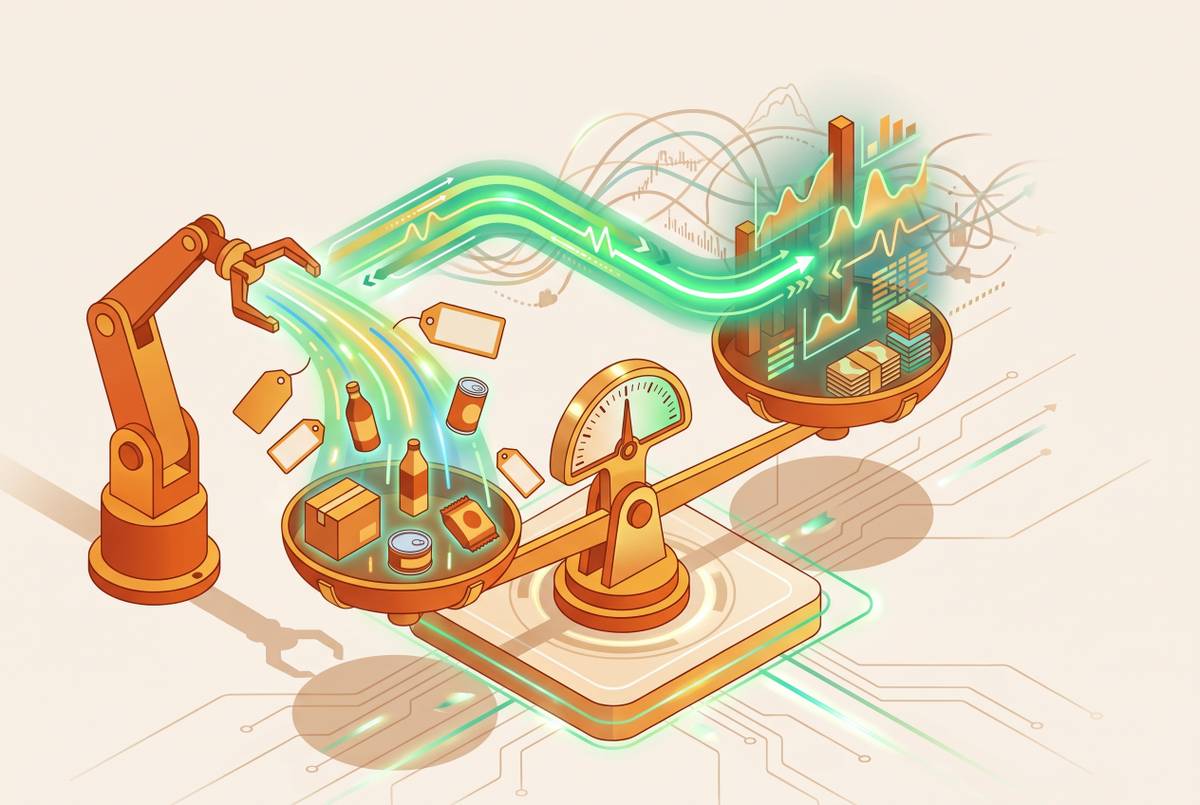
Both tools have a legitimate, defensible role on a storefront. But for a brand deciding where to invest first, the numbers point clearly toward the pre-purchase layer. Human-staffed live chat costs far more per conversation than an AI-driven interaction, and a well-deployed AI agent can resolve the large majority of incoming requests without a person ever touching them. That reframes the decision for a mid-market DTC brand. The question for the brand is whether it can afford to staff a contact center large enough to do manually what the AI already does at a fraction of the cost.
The revenue case stands on its own, separate from the cost savings. Companies that use AI agents in e-commerce report meaningfully higher revenue than competitors that haven't deployed them, alongside real cuts in support spend. The average order value lift documented at Satya Jewelry illustrates the mechanism behind that number: a guided conversation that helps a shopper find the right product, rather than a blunt discount thrown at anyone showing signs of hesitation, lifts the order's value instead of shrinking the margin. That mechanism is a function of giving a shopper better guidance at the exact moment they're deciding what to buy, and it applies beyond one jeweler or one category. Shoppers assisted by AI also complete purchases faster than those left to browse unassisted, and returning shoppers who interact with the AI agent spend more per session than those who don't. Both effects compound across a brand's base of repeat customers rather than producing a one-time lift.
None of this is a case for replacing live chat. A brand that routes a damaged-product complaint or a VIP relationship through an AI agent is applying the wrong tool to a job AI isn't built for, and doing so is likely to cost more in churn than it saves in support overhead. The AI sales rep's business case is strongest specifically at the pre-purchase layer: the volume is highest there, the cost gap between human and AI handling is widest there, and the revenue impact is most measurable there. So investment priority should follow that logic rather than a blanket preference for automation.
How the hybrid model works in practice: AI sales rep handles discovery and conversion, live chat handles resolution
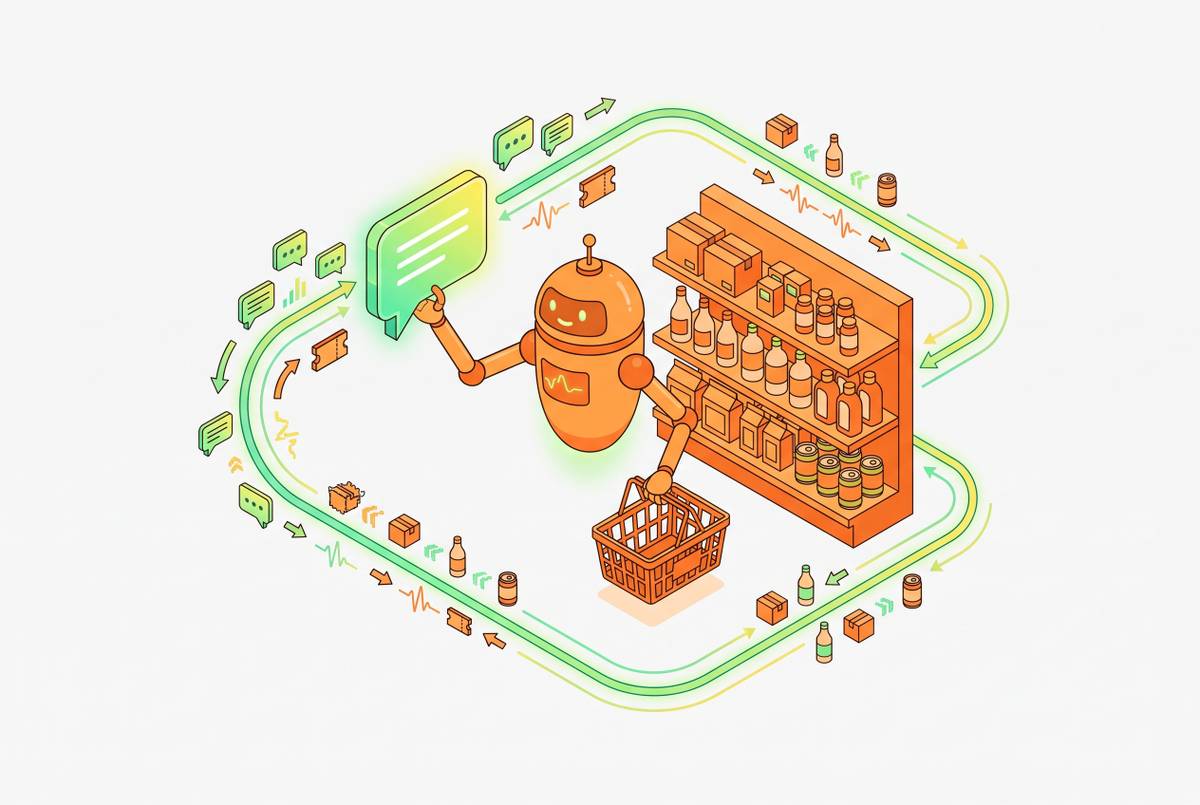
The strongest operating model is a sequence, where the AI rep handles every pre-purchase and high-volume interaction, and the human team receives only what's been escalated: the complex cases, the emotionally charged ones, the disputes, arriving with the full context of what the AI already learned about that customer.
Making that handoff work requires the AI to know precisely when to step aside. That means clear triggers built into the system ahead of time: language suggesting a dispute, a flag on a VIP account, a refund request above whatever dollar threshold the brand sets. When one of those triggers fires, the conversation routes to a human without forcing the customer to repeat everything they already said to the bot. And when that human agent picks up the thread, they need the full context waiting for them already in hand. The value of the AI's conversation history is that the live chat agent already knows what the customer asked, what the AI told them, and exactly where the friction showed up.
Naadam's support model offers a concrete look at what this looks like once it's working. Shopify's account of the brand's setup describes customers emailing in to praise specific support agents they loved, agents who turn out to be AI. Cavalry's case study on the same deployment puts a number on the split: the AI resolves roughly 80 percent of tickets, while the human team is reserved for the complex, high-value conversations that actually need a person. The human team at Naadam is freed up to spend its time on product and marketing, work that genuinely benefits from a person's judgment, because the AI is handling the volume that doesn't. The brand didn't trade customer experience for efficiency. It improved the experience by making sure humans only show up where a human adds something a bot can't.
Deployment speed matters here too. Off-hours browsing makes up a large share of DTC traffic, especially from AI-referred shoppers who show up at unpredictable hours of the day. An AI sales rep like Kinect can be deployed the same day, without requiring changes to the underlying platform, converting that off-hours visitor while the live chat team is asleep. That speed is itself part of the business case, since a tool that takes a quarter to implement loses several months of exactly the traffic it was built to capture.
Measuring what moved, attribution for AI-driven conversations
Once a brand deploys an AI sales rep, the next question is how to know whether it's working, and that turns out to be harder than it sounds. AI-driven revenue may be the single most under-attributed channel in DTC today. The lift appears in the data only as "direct" traffic and gets credited to nothing.
That problem compounds with one DTC brands are already fighting. Most brands already underpredict how much of their revenue comes from paid channels because of attribution gaps that opened up after mobile operating system privacy changes restricted tracking. Layering AI-referred traffic, which also tends to register as direct, on top of that existing gap makes the signal worse rather than better, unless the measurement approach is built to account for both problems at once.
A more honest measurement model starts by comparing engaged-shopper cohorts (visitors who actually interacted with the AI) against the brand's own baseline for the same period, rather than against an industry benchmark or a control group assembled after the fact. From there, the useful metrics are average order value, conversion rate, and session duration for the engaged cohort set against non-engaged visitors from that same traffic source, which isolates the AI's effect from whatever the underlying channel was already doing. Escalation rate and resolution time belong to a separate measurement track, since those describe how well the live chat layer is functioning and say nothing directly about revenue, and conflating the two obscures what's actually happening in each.
Triple Whale and Northbeam are among the attribution platforms most widely used by Shopify-centric brands, but neither one models true profitability or reconciles cleanly with finance. For a product-heavy DTC seller trying to understand what an AI sales rep actually contributed, the more useful platforms are the ones that join product-level revenue data to first-party event capture directly. That combination gets closer to explaining why a sale happened in the first place, rather than just noting which channel happened to touch it last.