OpenAI Operator and Shopify Stores
AI agents are reshaping how Shopify stores attract and convert qualified buyers.

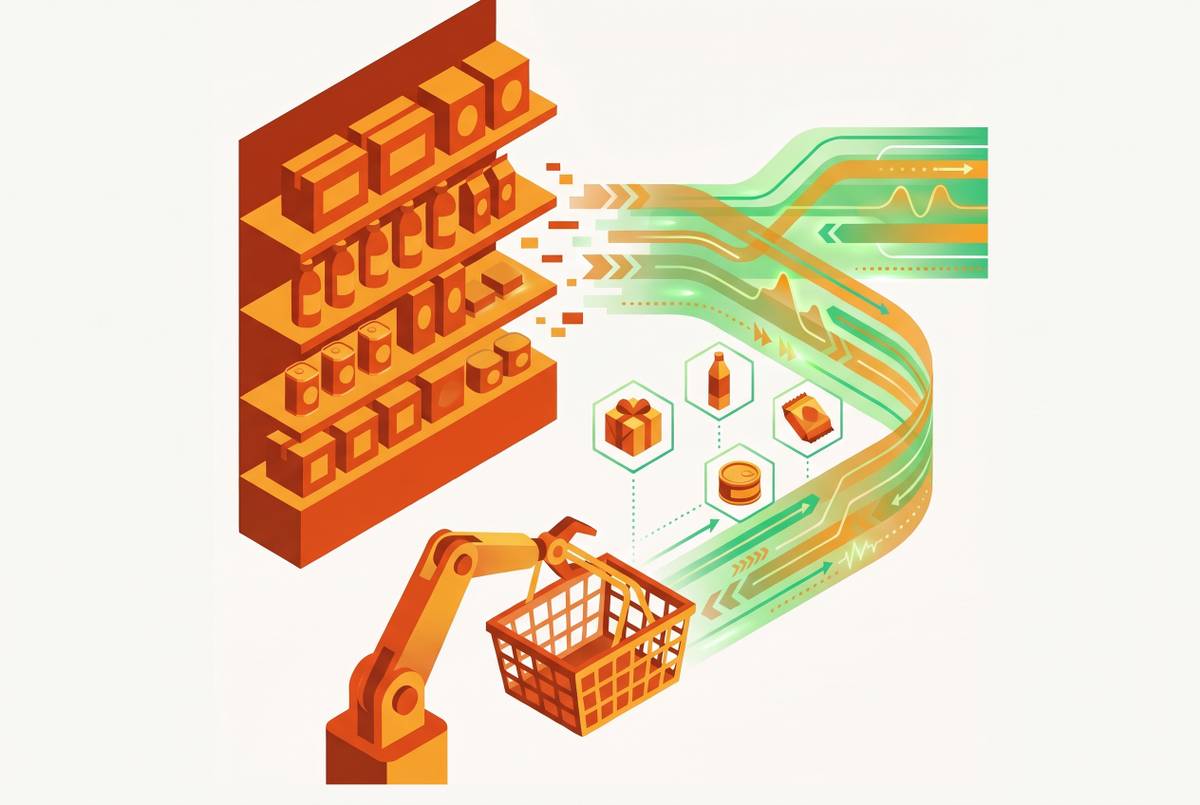
Shopify stores are now being shopped by software, not just people, and the agents doing the shopping read a store's data differently than a human ever would. OpenAI Operator sits at the center of that change: it's a browser-operating agent built to carry out purchases on a shopper's behalf, and its short history already shows where the agentic-commerce model works and where it still breaks.
How OpenAI Operator works as a shopping agent
Picture a shopper telling an assistant to find a solid entry-level espresso machine under $400 that heats up in under three minutes, pay with a saved Visa, and ship it to the office. A few seconds pass, and the assistant reports back: done, a specific machine ordered, a 10% coupon applied, arriving Tuesday. No cart was opened by hand. No one scrolled through search results or read a review. That is what Operator is built to do: it takes control of a browser, goes to the relevant pages, reads how they're structured, clicks through them, and fills out checkout forms, the way a person would but without a person doing it.
What's actually live today is narrower than that scenario suggests, and the gap is instructive. OpenAI's original plan, Instant Checkout, let agents complete a purchase without leaving the chat window. Walmart alone put roughly 200,000 products into that flow. But OpenAI backed off the approach in March 2026, saying the first version "did not offer the level of flexibility that we aspire to provide." Forrester analyst Emily Pfeiffer has pointed to two structural reasons the model struggled: getting merchants onboarded took far more work than expected, and the practice of scraping retailer websites for product data produced stock counts, prices, and shipping windows that went stale almost as soon as they were pulled. At the point of the pivot, only around 30 Shopify merchants were actually live on Instant Checkout, a long way from the "over a million" figure announced when the feature launched.
The model that replaced it is simpler and, for now, more durable: agents recommend, and shoppers complete the purchase on the retailer's own site, either through an in-app browser or a separate tab. Shopify has confirmed that its merchants fit the same pattern: shoppers can still find a Shopify merchant's products inside ChatGPT, but the checkout itself happens on the merchant's own storefront, and merchants don't need to build a dedicated ChatGPT app to take part. The direction OpenAI is now building toward is dedicated retail apps inside ChatGPT that reroute shoppers to merchant sites, which hands brands back the thing Instant Checkout would have taken from them: control over the customer relationship, the login data, and whatever loyalty program sits behind the purchase. The lesson here is less about OpenAI's product roadmap than about data: scraping a retailer's website produces stock counts, prices, and shipping windows that go stale almost immediately. Scraping a retailer's website is not a workable foundation for an agent that has to act on accurate stock, price, and shipping information in real time. Agents need to read structured, current, machine-readable feeds, not infer their way through a human-facing webpage. That single fact shapes nearly everything a Shopify merchant needs to do next.
The competing infrastructure underneath: ACP and UCP for a Shopify store
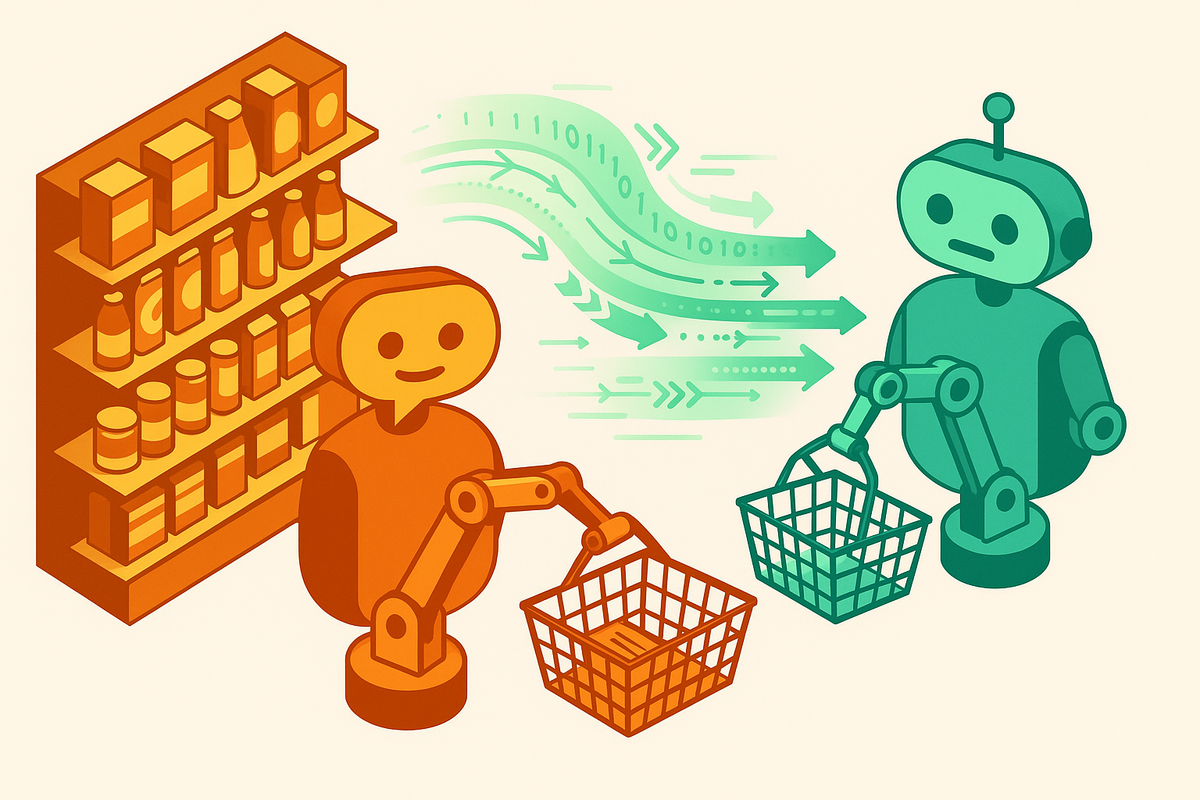
Operator is one agent built by one company, but the infrastructure a Shopify store needs to be legible to is bigger than OpenAI. Two open protocols now govern how AI agents find and transact with retailers, and most stores will need to work with both rather than pick one.
Google's Universal Commerce Protocol, announced at NRF 2026, covers the entire commerce journey, from the moment a shopper starts looking to whatever happens after the order ships. Shopify's own Agentic Storefronts, which rolled out to all U.S. merchants on March 24, 2026, are built on UCP as one of two underlying protocols, paired with ACP for ChatGPT integration. UCP is co-built with Google and backed by Shopify, Etsy, Wayfair, Target, Walmart, Stripe, Visa, and Mastercard, among others. That roster of payment networks and retailers signals a coordinated industry bet.
The clearest expression of what UCP makes possible is Google's Universal Cart: a single cart that persists across every surface a shopper touches. It's launching in Search first, arriving in Gemini by summer 2026, with YouTube and Gmail integrations to follow. An item added while searching is still there later inside Gemini; the shopper does nothing to carry it over.
For a Shopify merchant, the practical question isn't whether any of this will matter, because it already does. Agentic Storefronts are live for every U.S. merchant as of March 24, 2026. The infrastructure has shifted from a matter of adoption to a matter of readiness: whether a store's product data is structured well enough for these systems to read it and surface it accurately. Merchants who treat this as a future problem are, in effect, already behind.
One more piece of the stack matters to brands trying to make AI-referred customers pay for themselves: OpenAI's self-serve Ads Manager went live to all U.S. advertisers in May 2026. The minimum spend requirements that used to gate access are gone, and conversion tracking, pixel-based measurement, and attribution are now available to brands of any size, not just the largest advertisers who could previously negotiate direct access.
Why AI-referred shoppers on Shopify outspend organic search visitors
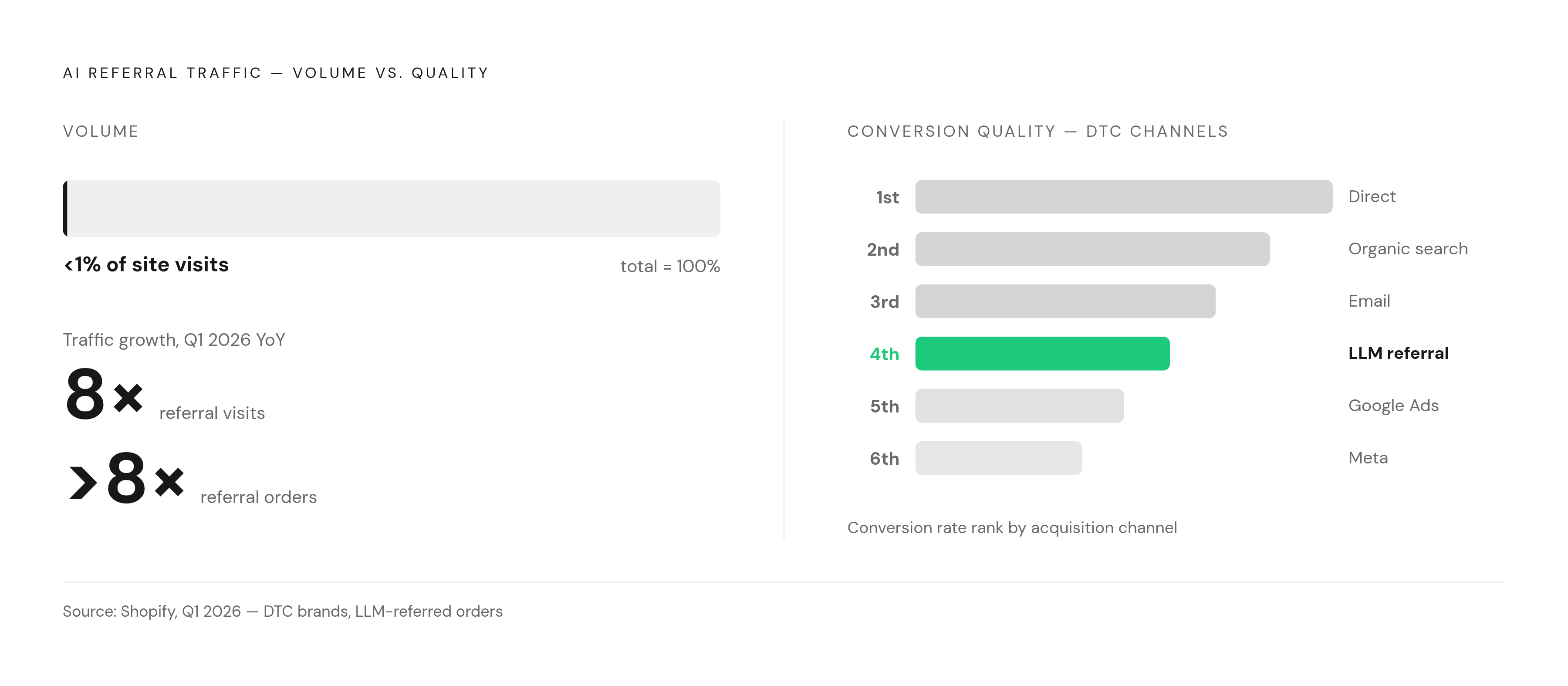
None of this infrastructure would be worth a Shopify merchant's attention if the shoppers arriving through it spent less or converted worse than anyone else. The opposite is true, and the data makes the case on its own. AI-referred traffic to Shopify stores grew more than eightfold year over year as of the first quarter of 2026, and AI-attributed orders grew even faster than the traffic that produced them. Those shoppers also spent more per order and converted at a meaningfully higher rate than visitors arriving through organic search.
Adobe's data from March 2026 shows the same pattern from a different angle: AI-referred traffic converted better than non-AI traffic, a full reversal from the year before, when AI-referred visitors converted worse. Those same AI-referred visitors spend more time on site and look at more pages per visit than other traffic, which runs against the easy assumption that an agent-assisted shopper is a rushed, transactional one.
What an AI shopping session actually looks like before it reaches a Shopify page explains why. A shopper working with ChatGPT or a similar assistant has usually already compared options, filtered out ones that don't fit their budget or requirements, and made most of their decision inside the conversation itself. By the time that shopper lands on a product page, the agent has already done the work a search results page used to leave to the human. The traffic isn't just more plentiful, it arrives pre-qualified.
Among direct-to-consumer brands tracking the channel correctly, traffic referred by large language models converts at a rate that ranks fourth among all acquisition channels, ahead of both Google Ads and Meta. That is a strong claim, and it deserves an honest counterweight. A Marketing Science study covering nearly a thousand e-commerce websites found that organic LLM traffic made up well below one percent of total visits, so the absolute volume moving through this channel remains small for most brands today. Both facts are true at once: the channel is thin in raw numbers and unusually strong in what each visitor is worth. Growth compounding from a small base tends to look unimpressive right up until it doesn't, and the brands that get their product data structured correctly now will hold positions in these systems that are expensive for competitors to take later. The conversion data already shows what each AI-referred visitor is worth. The volume is what's still catching up.
What AI agents read when they evaluate a product
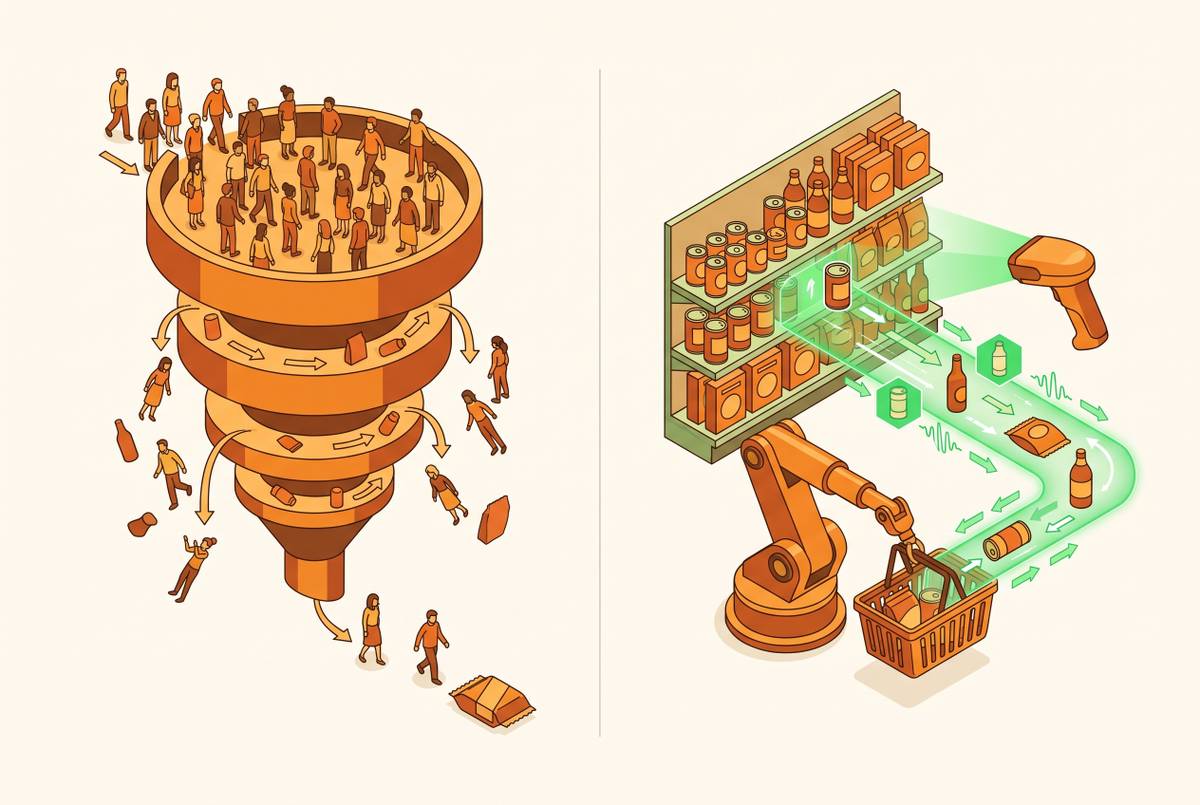
An AI agent working through a shopper's constraints, budget, dimensions, delivery date, dietary restriction, doesn't weigh those constraints the way a person browsing a page does. It checks for an explicit, machine-readable answer, and if a product page doesn't confirm the attribute in a form the agent can parse, the agent filters that product out and moves on to a competitor whose page does provide the answer. Marketing copy written for a human reader, no matter how persuasive, doesn't help if it can't be read as structured data.
The five major AI shopping surfaces, ChatGPT, Google's Universal Cart, Perplexity, Alexa for Shopping, and Microsoft's Copilot Checkout, pull from overlapping requirements: Schema.org Product markup, complete GTIN data, and the quality of a store's feed into Google Merchant Center. Each surface also has its own particular dependency. Perplexity draws on real-time web search, which makes a store's review coverage and any third-party editorial written about its products directly relevant to whether it shows up. Gemini, by contrast, is tied closely to Google Merchant Center and Google Shopping feeds, so the completeness of that feed carries more weight there than anywhere else.
Properly detailed Schema.org markup is specific. On the product itself, that means the exact GTIN or UPC, the brand, and the manufacturer part number. On the offer, it means the price, the currency, a priceValidUntil date, and a clear ItemAvailability status. On shipping, it means expected delivery times and shipping costs stated directly, because an agent working under a shopper's budget constraint calculates total landed cost before recommending anything. An Amazon listing with guaranteed Prime shipping will beat an unmarked Shopify page on that calculation even if the Shopify product is better or cheaper, simply because the agent can't verify the Shopify store's shipping cost.
Product copy also has to answer the kind of long-tail, conversational question a shopper would actually ask an assistant, the way the feature-list language stores have written for decades does not. An agent trained on natural language is looking for phrases like "non-toxic," "apartment-friendly," or "good for side sleepers," and a product description built around bullet-point specs rather than plain language misses those queries even when the product itself qualifies.
Shopify's own Knowledge Base app, released alongside Agentic Storefronts, gives merchants a way to control how agents answer questions about return policies, sizing, and shipping windows, generating FAQs that agents can treat as a trusted source. That tool improves the accuracy of what an agent tells a shopper about a store. It does not, on its own, increase how often that store gets surfaced. Those are two different problems, and solving one doesn't solve the other.
Being cited by an AI versus being recommended by one
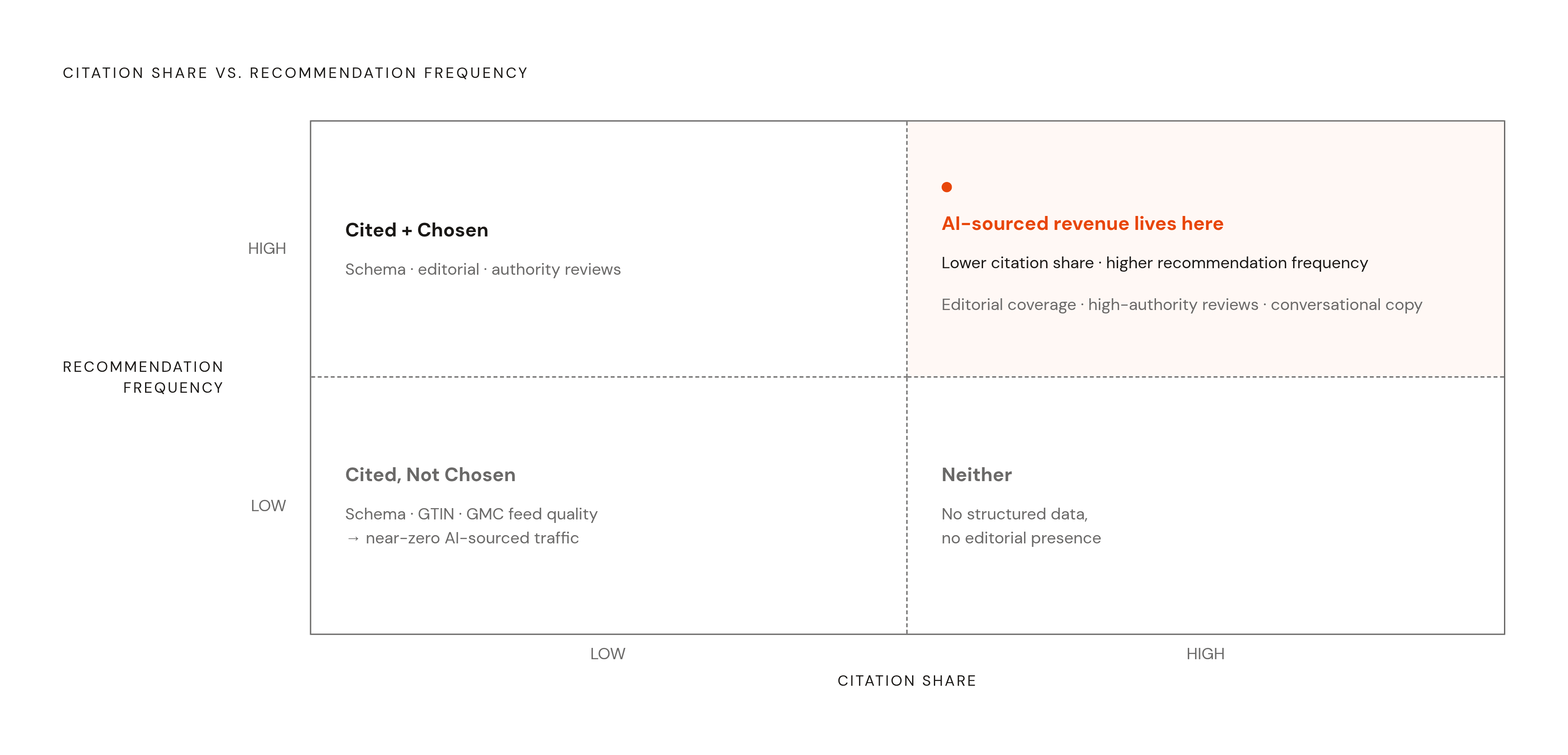
Getting a product mentioned in an AI response and getting it chosen by an AI agent are not the same accomplishment, and they don't come from the same inputs. Most brands currently investing in AI visibility are optimizing for the first outcome while assuming it will produce the second. It usually doesn't.
The clearest evidence of that gap: brands with a high citation share (they show up often when an AI system is asked about a category) but a low recommendation frequency generate almost no AI-sourced traffic worth measuring. Brands with a lower citation share but a higher recommendation frequency generate revenue that's real and attributable. The distance between those two brand types comes down to content quality. Structured data gets a product considered. What actually gets it chosen is third-party editorial coverage, a strong presence in high-authority reviews, and product pages written to answer the specific conversational questions an agent is processing on a shopper's behalf.
Perplexity is a useful illustration of what recommendation-quality traffic looks like once it shows up. Perplexity sends fewer visitors to Shopify stores than ChatGPT does, but those visitors carry a materially higher average order value. The surface most dependent on real-time editorial coverage, rather than a static product feed, is also the one producing the most valuable buyer, which says something about where the real leverage sits: not in volume, but in the quality of the coverage an agent is drawing from when it makes its recommendation.
Checkout friction functions as its own separate filter, independent of how good a product's data or editorial coverage is. If an agent working through a purchase hits a broken cart, an unannounced shipping fee that appears only at the final step, or an aggressive pop-up interrupting the session, it abandons that store and completes the purchase somewhere else. Whether an agent recommends a store now depends partly on a frictionless checkout.
Shopify's SimGym, currently available as an AI Research Preview, is built to test for exactly this kind of failure before it costs a store a real customer. It runs AI shoppers built around realistic personas through a storefront and reports back on add-to-cart rates, navigation patterns, and average cart value, and it can run two different store themes against each other to see which one performs better, all before a single human shopper ever sees the change.
Why brands are undercounting AI-driven revenue
Most Shopify merchants are working from a number that's already wrong. Standard analytics setups have historically folded AI-referred sessions into Direct traffic or generic Referral traffic, because the tools weren't built to recognize an AI assistant as its own kind of source. That misclassification means a store's reporting can understate what AI channels are actually contributing to revenue by a wide margin, and a merchant deciding whether AI readiness is worth the investment is often making that decision on bad information.
Google Analytics 4 addressed part of this on May 13, 2026, adding a new default channel called "AI Assistant," built to automatically classify traffic coming from ChatGPT, Gemini, Claude, and other AI platforms instead of letting it fall into Referral or Direct by default. That's a real fix for a real problem, but it doesn't close the gap entirely, because post-purchase AI influence, a shopper who gets a recommendation from an assistant and then buys later through a direct visit or a saved link, still won't show up correctly even with the new channel in place.
The more honest approach treats GA4's AI Assistant number as a floor rather than a ceiling, pairing it with a simple "how did you hear about us" question at checkout. Brands that run both consistently find that AI-influenced revenue runs two to four times larger than what GA4 reports on its own. For a merchant trying to decide how much to invest in structured data, editorial coverage, and a frictionless agentic checkout experience, that gap between the reported number and the real one often marks whether AI readiness gets treated as optional or as the most consequential investment on the roadmap.