Brand Agent vs Generic Chatbot for DTC Storefronts
AI agents are already shopping your storefront—your chat system is now a brand defense.
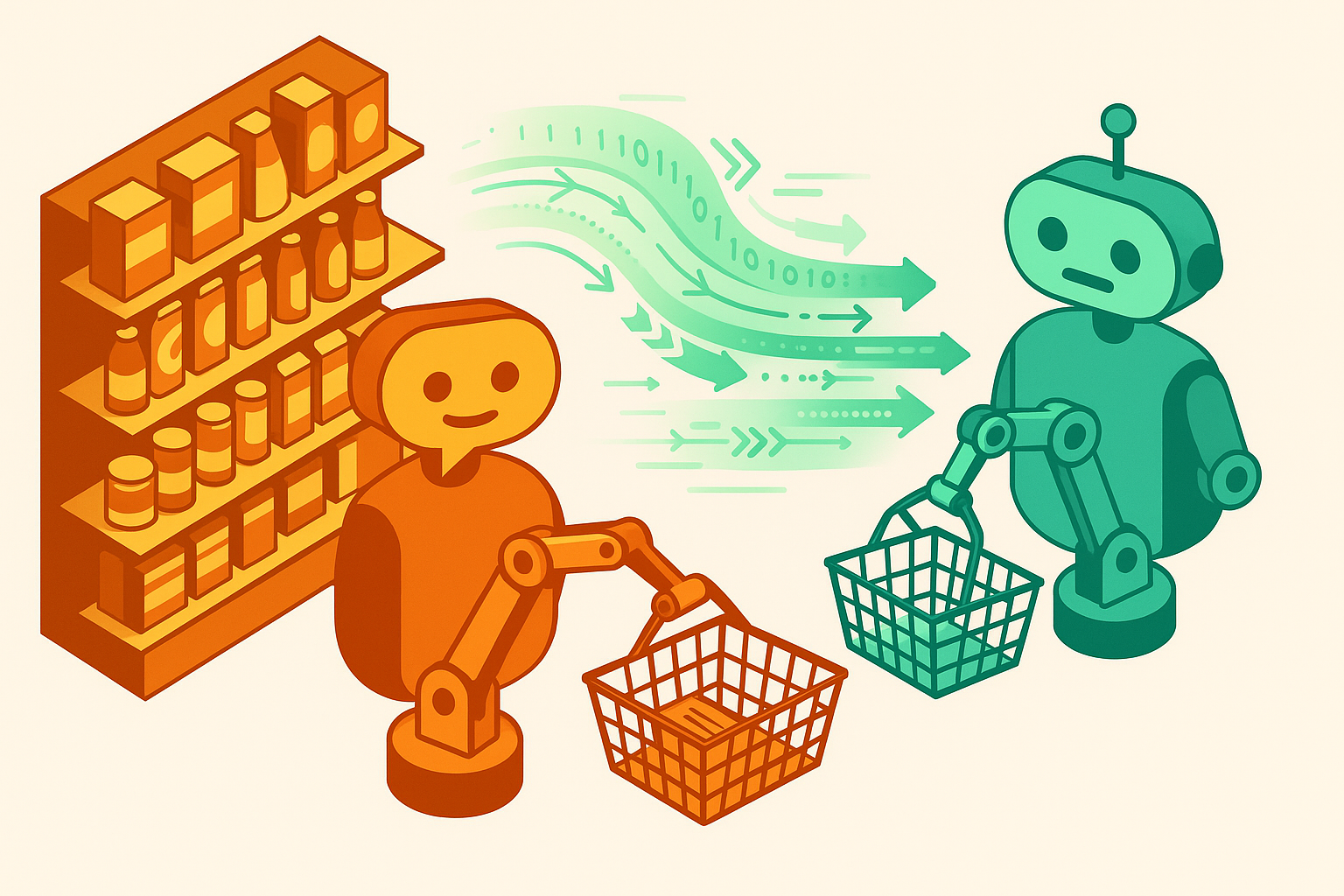
The AI layer sitting on a DTC storefront now must represent the brand accurately to two different buyers at once: the human shopper reading the chat window, and the AI agent that may be shopping on that human's behalf without ever rendering the page. So the choice of chat system is a brand ownership decision, not a customer service procurement decision. New protocols now make this shift possible at scale. Google's Universal Commerce Protocol, launched at NRF 2026, and Anthropic's Model Context Protocol are both live, letting agents pull real-time inventory, pricing, and product detail and act on what they find.
The transaction model has also settled into a specific shape. OpenAI deprecated ChatGPT Instant Checkout in March 2026, which moved the pattern away from "buy inside the chat" and toward "discover inside the chat, transact on the merchant's own site." Brands keep the customer relationship, the login data, and the loyalty engagement this way, but only if the handoff from AI discovery to the storefront holds together once the shopper lands. If the storefront's own AI layer can't pick up where the outside conversation left off, the brand loses the advantage that discover-then-transact was supposed to hand it. The traffic numbers show how quickly this matters: across a 94-million-session dataset, AI-referred sessions grew sixfold year over year, and ChatGPT referrals climbed dramatically in under two years. The channel's current share of total traffic is still small, but its growth rate is not something a DTC operator can treat as a rounding error for long.
Most brands still evaluate site chat as a cost center, something to be minimized and measured by how many tickets it closes. CUT
What a Generic Chatbot Is Built to Do
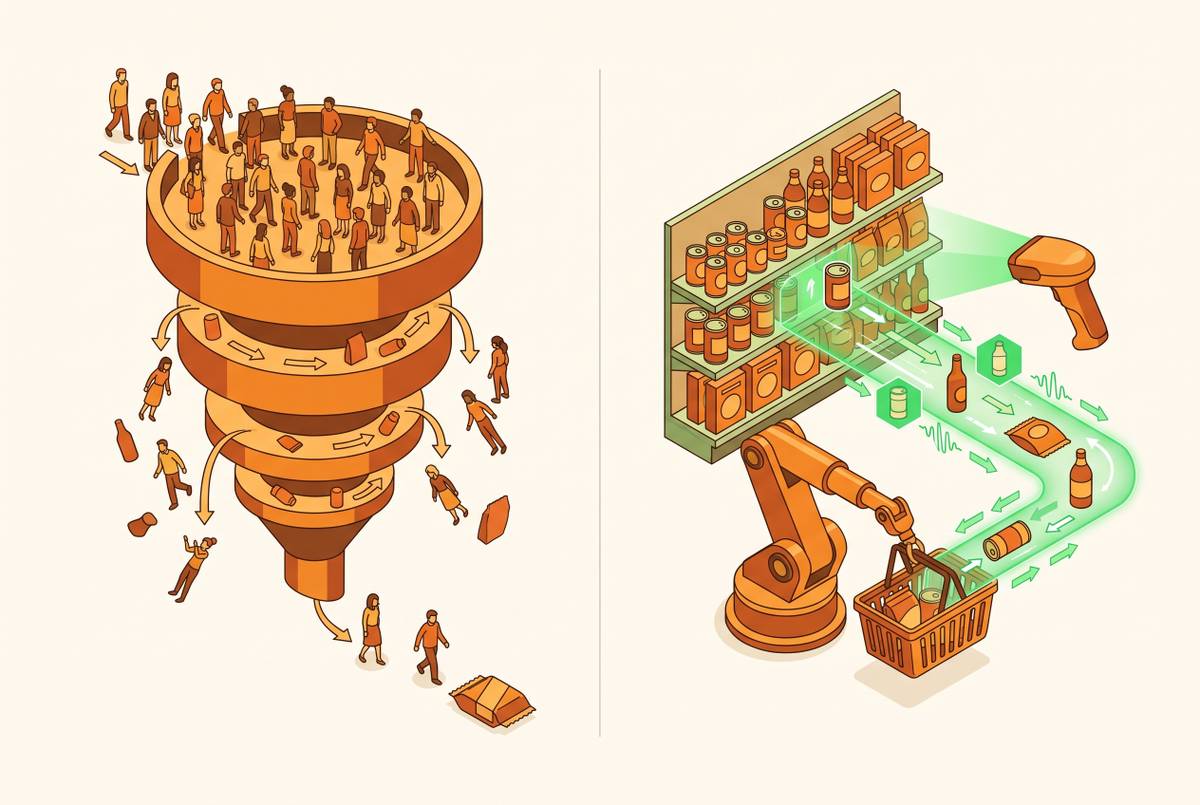
Generic ecommerce chatbots were built to solve a specific, narrower problem: post-purchase ticket deflection and broad FAQ handling. For that job, they work. They follow preset rules or retrieval patterns, and they can answer "where's my order" or "what's your return policy" without a human touching the conversation. What they are not built to do is make autonomous decisions or act dynamically on real-time customer data. They provide information, retrieving the closest matching answer from a knowledge base, instead of reasoning like a sales agent about a specific shopper's situation in the moment.
A shopper typing "does this run small?" at 11pm is signaling buying intent at the single most vulnerable point in the funnel, not filing a support request. A generic chatbot that routes that question to an FAQ page or promises a morning callback has already lost the sale, because the shopper who needed an answer at 11pm is unlikely to still be on the page at 9am.
DTC brands carry structural pressures, and a generic chatbot's architecture was never designed around them. Pre-purchase question volume runs higher than in traditional retail: sizing, ingredients, fit, scent, use case, each one a live conversion moment rather than a static FAQ entry. Channel fragmentation compounds the problem. Retention math adds a third pressure: in most DTC categories, the second purchase has to happen within a narrow window after the first, and a chatbot that doesn't carry preference data from one session to the next can't support that loop. Brand voice closes the gap. DTC customers want a brand's personality to show up even in automated replies, but a generic LLM produces brand-neutral prose by default, and it reads the same whether it's answering for a skincare label or a hardware supplier.
None of this makes generic chatbots poorly built. It means they were built for a different job: triage and deflection for high-volume, low-stakes support questions. DTC brands need three things a generic architecture structurally cannot deliver at once: pre-purchase conversion, consistent brand voice, and identity that persists across channels. A tool optimized for ticket deflection doesn't fail at those tasks by accident. It fails because it was never asked to do them.
Why a Brand Agent Differs From a Chatbot
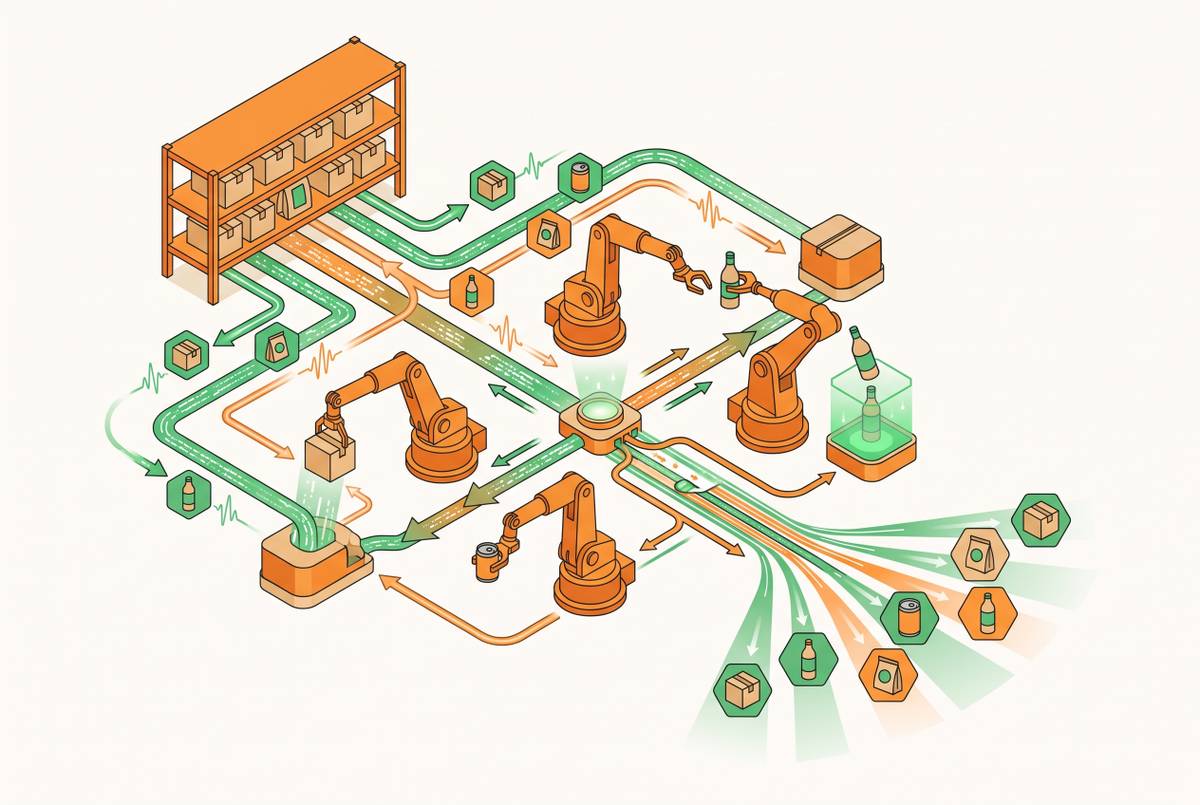
A brand agent reasons, pulls live data, and adapts to context, so it never just matches a query to a preset answer. It can parse intent on its own, reach into real-time inventory, and complete actions inside a single conversation, which puts it in a different category of system than a rule-following or retrieval-based chatbot. The configuration behind that capability is specific rather than general: an agent is a purpose-built configuration of AI, given tools such as APIs and databases, resources such as product documentation and brand voice guidelines, and a system prompt, and the combination makes it highly capable at that one job rather than broadly capable at many.
For a DTC storefront, that purpose-specific design appears in three places. A brand agent knows return windows, sizing charts, subscription terms, and shipping rules so well that it can answer at 11pm without hedging. It can surface what real customers actually said about fit, scent, or durability, and it never just recites a generic product description written for a listing page. And it responds in the brand's own register, rather than defaulting to the neutral tone a general-purpose LLM produces when it has no brand data to draw on.
Purpose-specific configuration is how Kinect approaches the problem. AI shopping agents from ChatGPT, Gemini, and Perplexity are already reading structured product data and making recommendations on a shopper's behalf, and those agents don't read a page's design. They read its data. When a brand agent surfaces accurate, structured product information, it serves that second audience just as directly as it serves the shopper typing into the chat window.
The stakes of that second audience go beyond visibility. Research on AI-mediated markets shows that when a buyer agent shops on behalf of a consumer, a seller can infer that consumer's willingness to pay from the dialogue alone, recovering it almost one-for-one. Thin or inconsistent product data is a liability at the exact moment the transaction gets framed, since an agent negotiating on a consumer's behalf relies on that data.
What the Traffic Data Shows About AI-Referred Shoppers
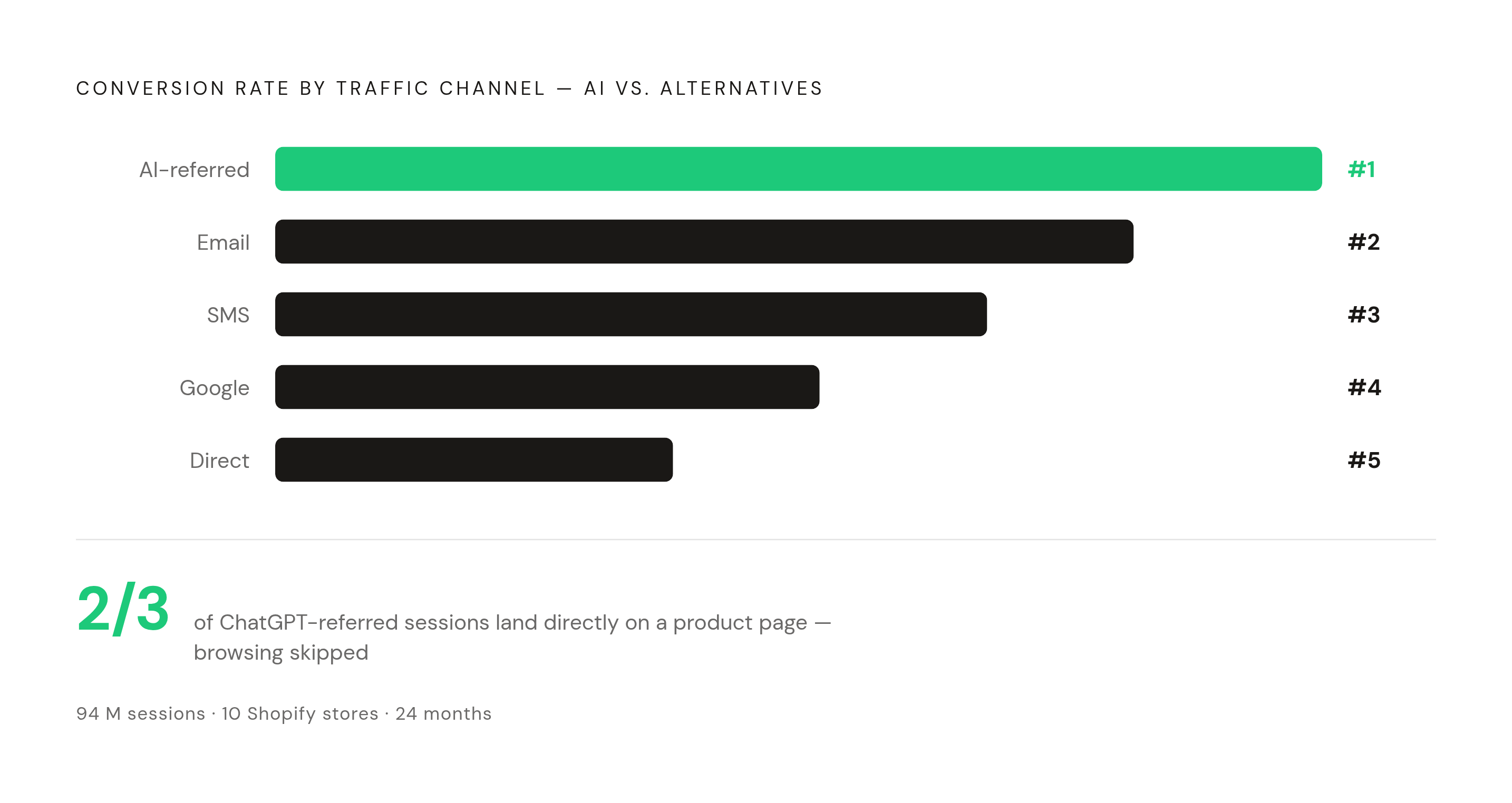
The traffic data on AI-referred shoppers makes a specific case: these visitors convert above average and skew overwhelmingly toward first-time buyers, which turns the on-site AI experience into a first-impression sales moment rather than a support function. Across 94 million sessions and substantial revenue on 10 established Shopify stores, AI-referred visitors converted at a higher rate than any other measured channel over 24 months, ahead of email, SMS, Google, and direct traffic. The mechanism behind that number is straightforward: the AI assistant already did the browsing before the shopper ever clicked through, so the visitor arrives pre-qualified. These sessions run shorter, with fewer pages browsed, but at every stage they move down the funnel about twice as fast as other channels do. Two-thirds of ChatGPT-referred sessions land directly on a product page, so they skip the homepage and collection browsing that most other channels still rely on. That visitor is looking for confirmation of an answer they already have, not an introduction to the brand.
The first-time buyer skew sharpens the stakes further. The overwhelming majority of AI-referred revenue comes from first-time buyers, well above the portfolio average, so AI traffic functions as acquisition, not cannibalized repeat business. A chatbot built around ticket-deflection logic greets this visitor as if they were an existing customer filing a routine request, when in fact they're a new buyer who arrived already warm and ready to convert or leave. The influence happened upstream of where attribution tools can see it, so these figures function as a floor on AI's actual role in the purchase decision, not a ceiling.
External AI systems decide what to show a shopper based on the same implications that extend past the storefront itself. A majority of brands that rank well on Google are never cited by AI systems at all, which means strong SEO carries no guarantee of AI discoverability, because the selection logic running underneath these systems works differently from search ranking. Getting listed in these systems isn't the same as getting recommended by them. Auto-enrollment puts a brand on the list, but what gets a specific SKU cited is the accuracy, richness, and consistency of the structured data behind it. A brand agent that maintains that structured data and surfaces it to both the storefront and these outside channels is doing work that extends well past the chat widget itself.
What Brand Agents Built for DTC Do Differently
The capability gap between a brand agent and a generic chatbot is visible most clearly in three places: pre-purchase conversion, post-purchase retention, and cross-channel identity. All three depend on brand-specific knowledge that a generic tool simply doesn't carry.
On pre-purchase conversion, a brand agent trained on sizing charts, ingredient lists, and product reviews can answer the 11pm sizing question with a definitive answer and close the sale in the same conversation, where a generic chatbot hedges or routes the shopper elsewhere. Kinect built its brand agent architecture to convert those moments: it reasons over live inventory, policy documents, and brand voice within a single trained model, so it never just retrieves a preset answer from a knowledge base that has no awareness of what's actually in stock. Decathlon's deployment with Zowie offers a concrete illustration of the pattern: the brand runs conversational commerce as a revenue channel and reports a meaningful increase in support-driven revenue coming from conversations its AI agent now leads, conversations that would have been logged as routine support contacts in a traditional org chart and now appear as P&L line items instead. Tatcha saw a substantial jump in average order value through AI-assisted shopping, and Victoria Beckham Beauty saw a meaningful AOV increase as well; in both cases, the lift came because the AI knew the brand's actual product range, not because of generic prompting techniques.
Post-purchase retention depends on a similar kind of memory. A brand agent that captures preferences during a first purchase, such as skin type, scent preference, dietary constraints, or intended use, can carry that context into the next interaction instead of starting over from zero. That continuity is the mechanism behind conversion rates for returning shoppers that run materially higher than a standard product search. Most DTC categories need a second purchase to land within 90 days of the first, so when a brand agent sends contextual replenishment reminders and smooths over re-order friction, it is doing retention work through a chat interface, not support work dressed up as something else.
Cross-channel identity closes the loop. A typical 2026 DTC purchase path might run from TikTok discovery to an Instagram DM question to a desktop browse to a mobile checkout, and it can span several days. Most generic chatbots treat each of those touchpoints as a fresh session with an unfamiliar visitor, but a brand agent built on unified customer intelligence carries context across all of them. That continuity also has consequences outside the brand's own storefront: when AI agents select merchants for a consumer's future purchases, they weigh how well past orders were supported, so a brand whose agent handles the post-purchase relationship well is building a reputation that persists inside buyer-agent memory itself.
Comparing Kinect and other brand agent platforms for DTC storefronts
A DTC brand evaluating this category is really choosing between a few distinct approaches: sticking with a generic support chatbot retrofitted toward sales, building a custom agent in-house on top of a general-purpose LLM, or adopting a platform purpose-built as a brand agent for commerce. Each comes with real tradeoffs in setup time, ongoing maintenance, and how well the resulting system actually represents the brand to both humans and outside AI systems.
Kinect is built around serving both human shoppers on the storefront and buyer agents from ChatGPT, Google, Perplexity, and Gemini reading the brand's structured data, using one trained model rather than separate systems for each audience. On the integration side, it connects natively with Shopify through a theme extension, live the same day, with no theme rebuild required. WooCommerce, Salesforce Commerce Cloud, and Adobe Commerce run through a hosted API and React SDK, and the platform works alongside Klaviyo, Gorgias, and Judge.me rather than requiring a brand to rip out its existing stack. Structured data enrichment is built into the same system, so the product data a brand maintains for its own storefront is the same data that reaches external AI shopping channels, rather than two separate feeds that can drift out of sync.
Whichever approach a brand chooses, the traffic data and the protocol shifts described earlier are already holding every storefront to that standard.