Tracking Traffic and Conversions From AI Shopping Channels in GA4
Set up GA4 channels to measure AI shopping traffic separately.
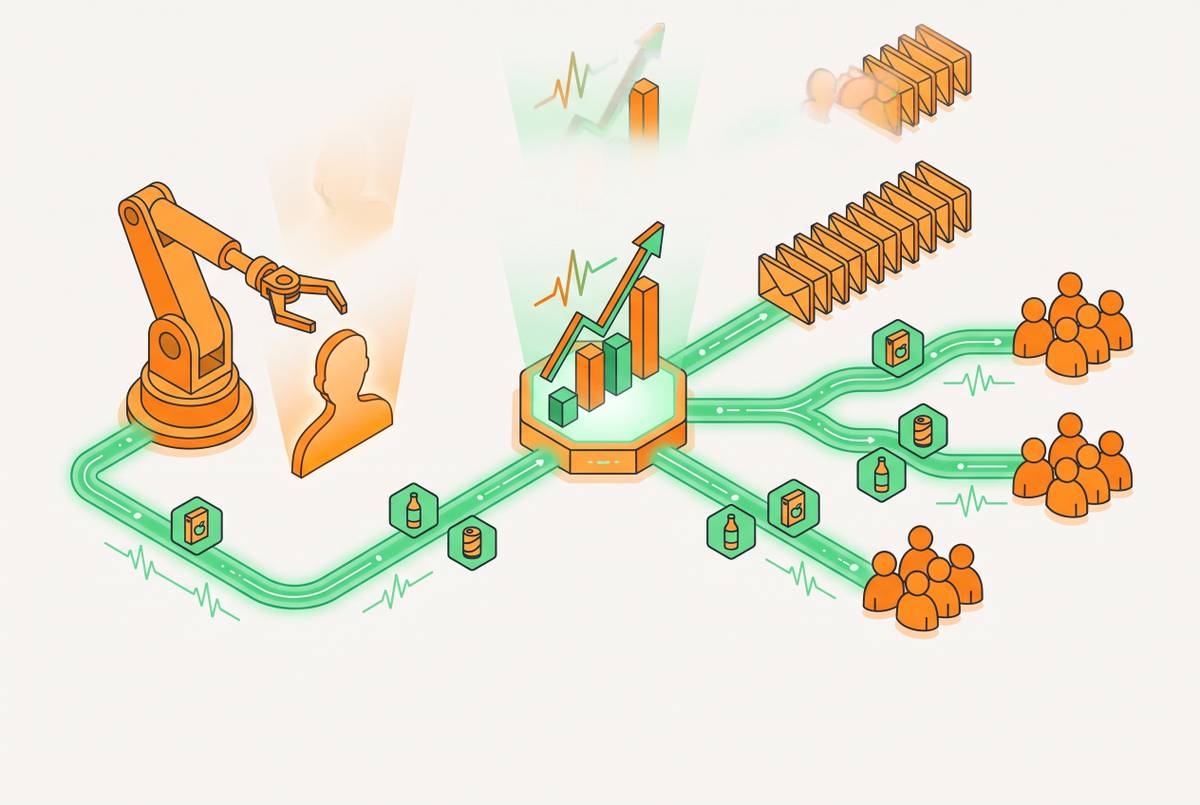
Tracking traffic and conversions from AI shopping channels in GA4 requires both configuration and a clear account of what attribution cannot see. Native channel reporting, custom channel groups and GTM can isolate useful signals, but they cannot recover every AI-influenced visit. The acquisition channel is measurable, with a reported contribution that represents a minimum bound on its revenue total.
Why AI shopping channels are now a measurable acquisition channel, not just a discovery surface
Shopify’s early-2026 data shows that AI assistants help people browse and send buyers to stores. AI-referred traffic to its merchants grew sharply between January 2025 and early 2026, and AI-attributed orders grew even faster. That commercial growth makes separate measurement necessary.
The visitors also arrive with a different starting point from a typical organic search session. A shopper who clicks a product recommendation in ChatGPT has already completed part of the research inside the conversation. The recommendation supplies implicit social proof, while the discussion has helped narrow the shopper’s need. That preparation compresses the decision timeline once the shopper reaches the store. AI-referred sessions convert at a meaningfully higher rate than standard organic traffic, making conversion quality, rather than visit counts alone, the reason to isolate them.
What GA4 actually captures about AI traffic before any configuration changes
Before the May 2026 native channel update, AI referrals had no default channel of their own in GA4. Visits carrying referrers from ChatGPT, Perplexity, Claude or Gemini entered the generic Referral bucket with forum backlinks and coupon sites. GA4 could record the source, but the channel report concealed its significance. The report could thus hide a growing stream of AI visitors who were more likely to buy. Reporting its contribution required more than reading the default channel totals.
That baseline contains two separate measurement problems. The first is classification, where a visit arrives with a clean referrer header but GA4 groups it under generic Referral. The source information exists, so configuration can separate it. The second is missing attribution, where someone discovers a brand through an AI assistant and then searches for it on Google or visits directly. GA4 records Organic or Direct because the session does not arrive as an AI referral, and a channel rule cannot recover the earlier conversation.
GPTBot and ClaudeBot visit sites to index content. GA4 filters most of that bot traffic automatically, and it is not the traffic relevant to conversion measurement. The unit of interest here is the shopper’s session after an AI recommendation.
GA4's native AI Assistant channel: what the May 2026 update does and what it still misses
Google’s May 13, 2026 update introduced automatic classification for recognized AI referrers without requiring property configuration. When GA4 detects one, the medium becomes ai-assistant, Default Channel Group reports show “AI Assistants”, and the campaign receives the reserved label (ai-assistant). Google’s launch note named ChatGPT, Gemini and Claude as recognized referrers. Its live Default Channel Group documentation subsequently listed ChatGPT, Gemini, DeepSeek, Copilot and Grok, with Claude absent from the current definition.
The update also creates a boundary in historical reporting. Sessions recorded before May 13, 2026 retain their original channel assignments. A report that starts before that date needs more than the native channel to show the AI traffic trend across the whole period. Its apparent starting point reflects a classification change, with the first AI-referred shopper potentially arriving earlier. Brands that need a continuous series from before May 2026 still need a custom channel group with regex rules.
Recognition also depends on the evidence that reaches GA4. The native channel captures sessions that have a clean referrer header, but traffic from mobile apps, especially iOS AI apps, often loses that information. Those visits can land in Direct regardless of the new classification. The native channel therefore improves the handling of identifiable referrals without solving missing attribution.
Building the custom channel group and GTM layer that catch what the native channel misses
In GA4, go to Admin → Data Display → Channel Groups → Create new channel group. Add a channel named “AI Search” or “AI Traffic” and define its rule so that Session source matches a regex covering the primary AI domains. The minimum expression is chatgpt\.com|chat\.openai\.com|perplexity\.ai|claude\.ai|gemini\.google\.com|copilot\.microsoft\.com. The rule needs both ChatGPT domains because the old form still appears in referral data. ChatGPT accounts for the large majority of identified AI referral traffic, followed by Gemini and Perplexity, making those the first coverage priorities before extending to Copilot and Claude.
Before saving, validate the expression in an Exploration report. Use a free-form table with Session source as the row and Sessions as the metric to inspect the sources being included. An overly broad expression can pull unrelated referrers into the AI bucket and distort its conversion performance. Then drag the AI Search channel above Referral in the evaluation order. GA4 assigns traffic to the first matching rule from top to bottom, so a matching Referral rule placed first prevents the custom AI rule from doing its job.
Use the custom channel group in standard reports to build the historical view. Unlike the native update, custom channel groups apply to historical data, allowing identifiable AI referrals to be grouped back to when the property was collecting them. This gives a view across the May 2026 boundary while leaving the original native channel assignments as they were. It also separates AI referral sources that the native channel does not recognize, while leaving historical Direct visits with no AI source information unchanged.
Next, add the GTM layer for platform detail alongside the channel group. Create a JavaScript variable that checks document.referrer on page load against the same AI domain list. When it matches, fire an ai_referral_detected event with the specific platform passed as a parameter. In GA4 Admin → Custom Definitions, add platform as an event-scoped custom dimension. This supports platform breakdowns in Explorations and audience building, including an AI-referred audience for Google Ads activation or conversion analysis by entry point.
Finally, add a way to track some of the clicks from Google AI Overviews. Those clicks enter standard Google Organic because their referrer is google.com, so neither the native AI channel nor the AI-domain regex isolates them. A GTM Custom JavaScript variable can check for the #:~:text= fragment in the landing URL and fire an ai_overview_click event when it is present. Register the highlighted text parameter as a custom dimension for filtering. This identifies some AI Overview sessions within Organic, but browser preservation of the fragment is not guaranteed, so the event must not be treated as a full count.
The dark-traffic problem that no GA4 configuration can solve
A substantial share of AI-influenced visits never arrive as referrals, leaving their AI origin outside the channel rules just configured. A shopper may ask ChatGPT for a clean beauty serum below a budget threshold, receive a brand recommendation and close the app. If the shopper then types the brand into Google or navigates directly to the site, GA4 sees branded organic or Direct traffic.
Referrer stripping creates a similar reporting outcome through a different route. A shopper can tap a link inside an iOS AI app and still arrive in a browser session with a null referrer. GA4 then labels the visit Direct even though the shopper followed a specific recommendation. The custom channel group and GTM referrer check have no source value to match in that case. This is a limit of the available evidence.
An unexplained structural rise in branded organic search or Direct traffic is a plausible sign of AI influence worth investigating, although it does not establish that influence on its own. Post-conversion surveys reach into this gap by asking customers whether they used an AI assistant before visiting. They capture a part of the discovery journey that tracking tags cannot recover. Their role is to supplement observed referrals.
GA4’s AI channel measures an identifiable minimum contribution that can support analysis of conversion quality, destinations and platform performance. Survey responses and changes in branded organic or Direct traffic provide context around that minimum.
Reading the AI traffic data GA4 does surface: conversion quality, platform differences, and what to act on
Within that measurable floor, platform-level differences matter more than an aggregate AI total. Claude-referred sessions have the highest conversion rate among the major platforms, though they make up only a small share of referrals. ChatGPT combines a strong conversion rate with the large majority of visits, making it the highest-priority platform for absolute revenue contribution. Gemini-referred sessions convert at a notably lower rate than the other major platforms. These differences mean that the highest-converting source and the largest revenue opportunity are not necessarily the same.
Landing destination provides a second useful breakdown because it is both measurable and controllable. AI-referred sessions that start on a product page convert at a higher rate than those that begin on a homepage or category page. Roughly half of AI-referred visits already start on a product page, making this an important part of the channel’s performance. Structuring product feed links correctly influences which destination the assistant links to.
A large majority of AI-referred revenue comes from first-time customers, so first-purchase conversion rate gives only a partial account of its value. Lifetime value calculations are the appropriate measure for that customer contribution. Higher engagement and conversion rates show the quality of the sessions GA4 captures, but a customer’s value goes beyond the first purchase.
Over time, read the referral series against the signals that can reveal its missing context. Watch for growth in branded organic search and Direct traffic, more mentions of AI assistants in post-purchase surveys, and changes in the amount of traffic in GA4’s AI channel. When those signals rise together, they help triangulate influence beyond what referral reporting alone shows, while leaving the exact recovered attribution total uncertain. Their value is in supporting a more complete interpretation of whether AI is contributing to acquisition and where that contribution is becoming commercially important.
Why the data GA4 measures is downstream of a decision made before any click
An AI system must surface the brand and describe it accurately before a shopper can follow its recommendation. A brand absent from those recommendations has little meaningful AI traffic to measure, however precise its GA4 configuration. Strong visibility, by contrast, can lift both the measured referral floor and the branded organic signal. Referral reporting records the consequence of that visibility.
The upstream lever is therefore the information AI systems use to represent the brand and its products. Graas announced its acquisition of AI product data platform Trustana on August 12, 2026, together with a Series B fundraise led by LemmaTree. The retail AI company’s acquisition shows how much agent-driven commerce depends on clean, structured product information. That dependency connects product information to recommendation visibility and, eventually, to measurable visits.
GA4 configuration separates the referrals that carry evidence, while surveys and adjacent acquisition trends help interpret what those referrals omit. Improving the upstream signal addresses whether the brand appears in the recommendation at all. A credible AI shopping report holds those distinctions together, measuring the traffic it can identify without mistaking that floor for the channel’s full value.