Post-Purchase AI Conversations and Repeat Revenue for DTC Brands
AI agents can drive repeat purchases by answering customer questions when they matter most.
Every acquisition dollar a DTC brand spends buys a single conversion, and the highest-return moment that follows it, the weeks right after a confirmed order, usually goes untouched. That is where the money is being left on the table, and the gap is structural rather than accidental.
Why the Post-Purchase Window Is Underinvested
The arithmetic behind customer retention is not complicated, and it is not new. Acquiring a new customer costs five to seven times more than keeping an existing one, so every repeat purchase runs on economics a first purchase never gets to enjoy. A customer who just completed checkout has already told the brand something valuable: they trusted the product enough to pay for it, found the fit or formulation close enough to what they wanted, and acted on real intent rather than idle browsing. None of that trust holds indefinitely. It fades the longer a brand goes quiet after the confirmation email, and most DTC teams let that fade happen by default.
The budget allocation tells the story. AI investment across DTC concentrates almost entirely on the pre-purchase side: product discovery tools, onsite chat that answers questions before checkout, cart recovery flows aimed at shoppers who almost bought. Post-purchase, by contrast, gets treated as a logistics problem to manage rather than a revenue opportunity to build: shipping notifications, return processing, and an occasional winback email sent on a fixed schedule regardless of what the customer actually needs. That's a mismatch between where the spend goes and where the highest-intent customer sits. A customer who just bought is, for a short window, more engaged with the brand than at almost any other point in the relationship, and that window is where the investment is thinnest.
The compounding math favors fixing this. A customer retained for a second, third, and fourth purchase doesn't just generate one more sale; their lifetime value accumulates across years in a way no single conversion-rate optimization on a landing page can replicate. A modest improvement in retention rate, applied across a customer base over multiple purchase cycles, produces revenue gains that dwarf what the same effort would produce chasing marginal gains in first-time conversion. Brands that pour resources into the top of the funnel while leaving the post-purchase window on autopilot are optimizing the smaller, more expensive half of the relationship and ignoring the larger, cheaper half.
Buying Becomes Asking: The Moments Between Purchases
The way shoppers find and evaluate products has changed in a way that extends well past the moment of acquisition. Commerce used to run on clicks: a shopper browsed, compared, and clicked "buy." Increasingly, it runs on conversation: a shopper asks an assistant a question and acts on the answer it gives back. That shift doesn't end once a purchase closes. It continues to shape how a customer thinks about a brand in the weeks and months that follow, and a brand with no presence in the AI channels a shopper consults between orders simply gets described by whatever an outside model assembles from scraps of public information.
The scale of this shift is no longer a matter of speculation. Shoppers query tools like ChatGPT, Perplexity, and Gemini before they visit a brand's site, while they're comparing options, and after they've already bought something. Salesforce's latest State of Commerce report found that a substantial majority of consumers now use AI agents or AI-powered assistants at some point during their purchase journey. AI referral traffic to U.S. retail sites grew roughly 393% year-over-year in the first quarter of 2026 alone, a rate that puts the channel well past the experimental stage and into one already sending real buyers to real stores. Traffic that arrives this way also converts better than traffic from conventional search or social, because the AI has effectively pre-qualified the shopper inside the conversation before they ever land on a product page, so the visitor who does arrive is warmer than one clicking a paid ad.
The same pattern plays out between purchases, where it matters just as much as it does before the first sale. A customer who bought a skincare product three weeks ago and asks Perplexity what to layer it with will get an answer regardless of whether the brand had anything to do with shaping it. The post-purchase stage is specifically where agent infrastructure handles order status, returns, and re-engagement, and a brand with no presence of its own at that stage hands the entire relationship over to platform-mediated agents by default.
What post-purchase AI conversations do that email sequences cannot
That distinction changes who is driving the interaction. Email sequences are broadcast by design. They send a message the brand predicted the customer would want, on a schedule the brand set in advance. Conversational AI flips that relationship: it responds to what the customer actually wants to know, whenever they happen to want to know it.
Consider a customer who just received a moisturizer and wants to know whether it's safe to layer with a serum already sitting in their bathroom cabinet. That question has a real answer, and it's one the customer wants the same day the thought occurs to them, not three weeks later when a scheduled winback email happens to land.
None of this requires speculative technology. Post-purchase agent behavior already covers order status monitoring, delivery notification handling, and return or exchange initiation. The infrastructure for this kind of conversation already exists and runs in production today. Brands that put their own intelligence into that infrastructure extend their presence into a stage of the relationship that most competitors have ceded entirely to generic platform agents. The return on doing so isn't theoretical, either. Brands surveyed on where conversational AI delivers the highest return ranked improved customer retention and loyalty second only to support efficiency. The revenue case for post-purchase conversation already shows up in the data companies are gathering on themselves.
The three specific revenue mechanisms post-purchase AI conversations activate
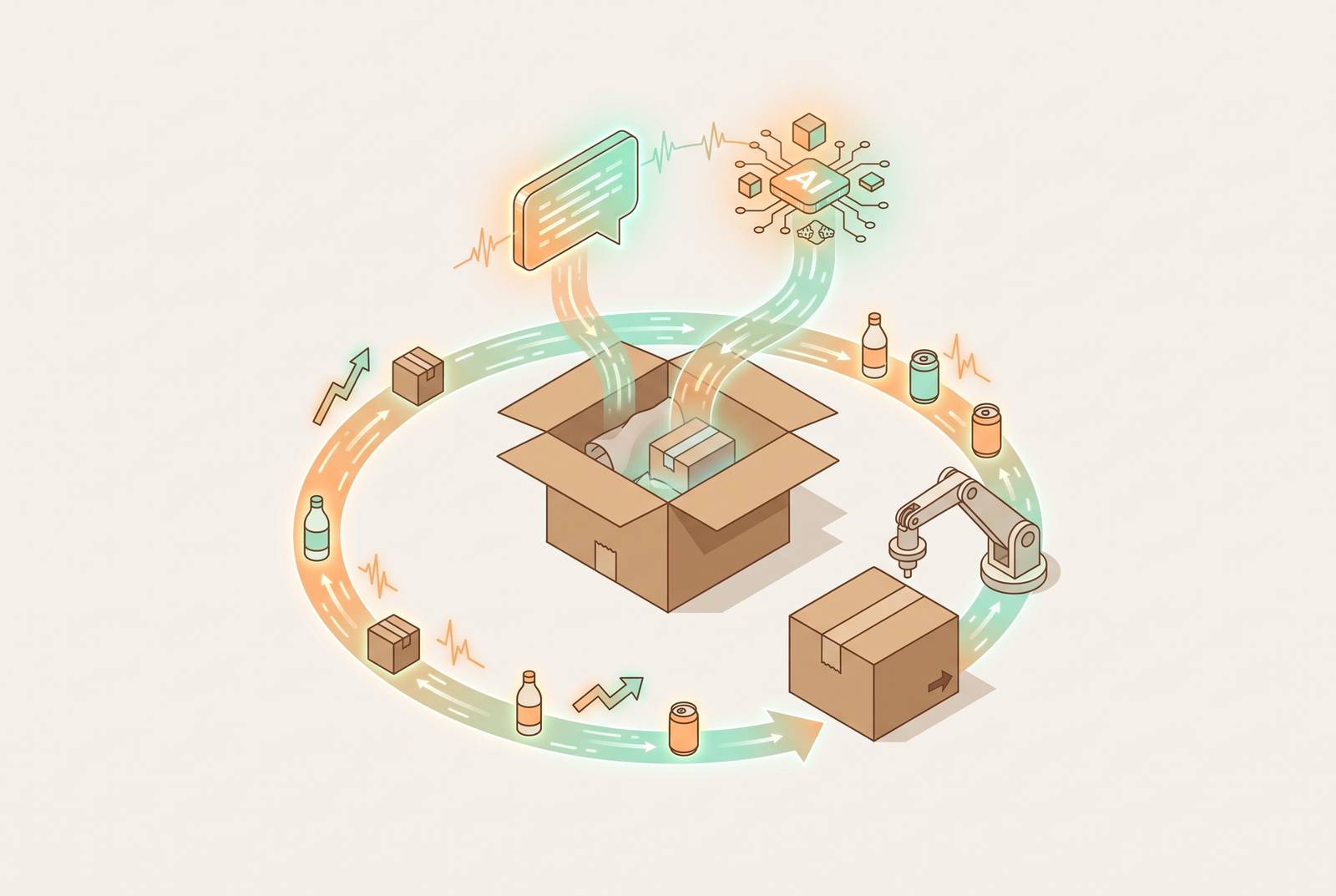
Post-purchase AI conversations create repeat revenue through three separate mechanisms, each of which stacks on top of the others rather than competing for the same dollar: resolving a customer's follow-up questions before those questions turn into a return, surfacing the next relevant product at the moment a customer is most receptive to it, and keeping the brand visible and citable inside the AI channels a shopper consults between orders.
The first mechanism works by intercepting returns before they happen. A large share of DTC returns trace back to confusion, about fit, usage, ingredients, or care, rather than to any defect in the product itself. An AI conversation that can answer those questions the moment a customer has them, right after delivery, catches the return before the customer ever decides to send the product back. Deflecting a return this way saves more than the cost of shipping and restocking. It turns someone who might have become a detractor into a confirmed satisfied customer, and that shift has knock-on effects on review volume and on how often AI agents cite the brand, since reviews function as a primary signal in how those agents rank and recommend products.
The second mechanism surfaces the right next product at the right moment. A customer who just opened a package is actively engaged with the brand: trying the product, forming an opinion, paying attention in a way they won't be again until the next order arrives. That customer is more receptive to a relevant follow-on recommendation than one sitting in a cold re-engagement email list.
The third mechanism keeps the brand present inside the AI channels shoppers use when they're not actively on the brand's site. A brand that doesn't actively structure its own data and content gets described entirely by what those third parties happen to say about it. ChatGPT currently accounts for the largest share of AI referral visits, with Perplexity and Gemini holding meaningful shares behind it. A brand's structured data feeds all three of these channels at once, and a post-purchase conversation that generates accurate, on-brand content about products adds directly to the signal those channels draw on.
These three mechanisms compound when a brand runs all of them together. A brand that only sends scheduled winback emails captures none of this: no return deflection, no upsell at peak receptivity, no citation inside the AI channels shoppers actually consult. A brand running all three turns the post-purchase window into a system rather than a single campaign.
Catalog Quality and Post-Purchase Retention
None of the three mechanisms above work if the AI powering them has nothing accurate to draw on.
Human shoppers and AI agents read product listings in fundamentally different ways. A person skims a description, looks at the photos, and forms an impression. A product listed simply as "moisturizer, 50ml, fragrance-free" has nothing to offer a customer who, two days after delivery, asks whether it's safe to layer with a retinol, whether it works for rosacea-prone skin, or whether it's reef-safe. These are ordinary questions a real customer asks within days of an order arriving, and a thin listing can't answer any of them.
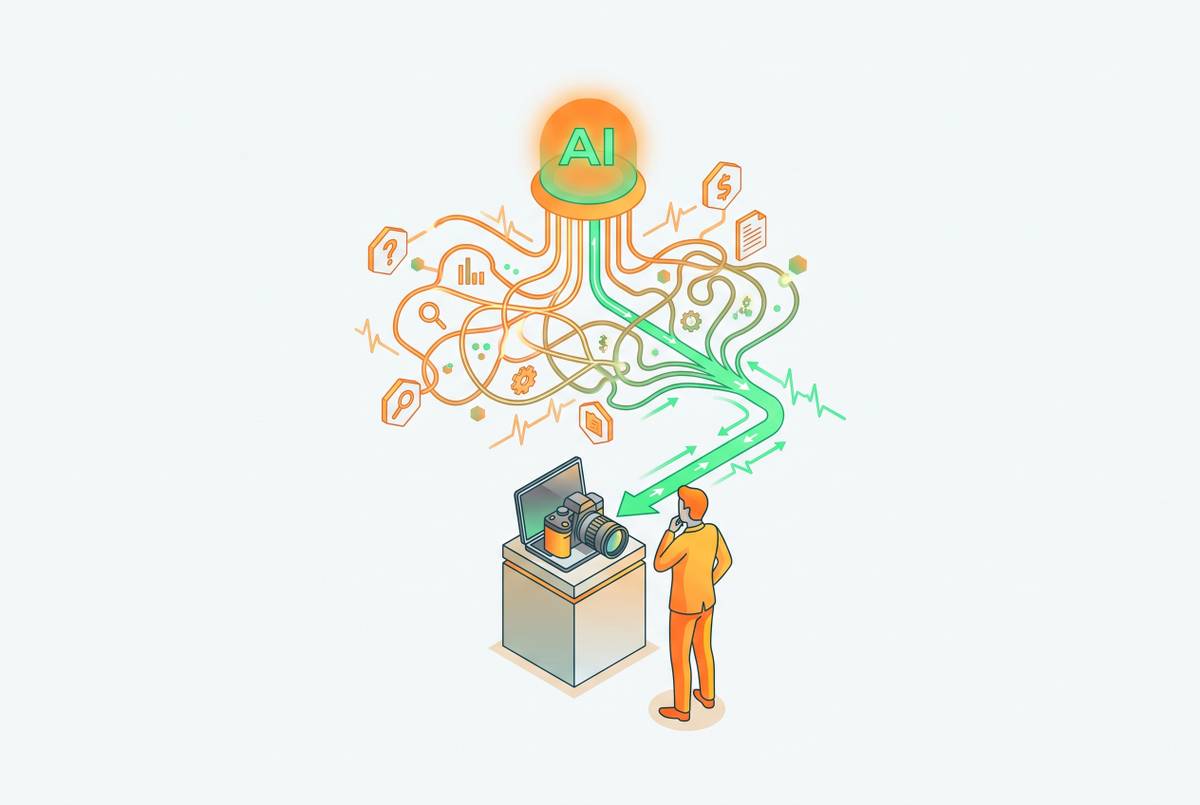
AI agents handle this gap by looking elsewhere.
Fixing this isn't a matter of adding marketing copy on top of an existing listing. This work sits inside a discipline distinct from traditional SEO: earning citation from AI models requires content quality and data structure, not keyword density, and post-purchase is where brands have the most first-party signal to build that structured content. Post-purchase interactions generate exactly the first-party signal, order history, support queries, review patterns, that this discipline runs on, and most brands aren't using any of it.
Agent Infrastructure and Brand-Owned AI in Post-Purchase
The infrastructure for agent-mediated post-purchase interaction already exists at the protocol level, built by some of the largest companies in commerce and payments. The three protocols doing the most work here, ACP, UCP, and MCP, already handle post-purchase logistics without a brand needing to build anything from scratch. The real question for a DTC brand is which intelligence drives these interactions once agents manage them. It's whether the agent handling them runs on the brand's own intelligence or on whatever generic default the platform supplies.
The Universal Commerce Protocol, co-developed by Google and Shopify and announced at NRF in January 2026, covers the entire shopping journey, post-purchase support included. Its technical council now counts Amazon, Meta, Microsoft, Salesforce, Stripe, Visa, Mastercard, Adyen, American Express, Best Buy, and Macy's among its members, which marks this as production infrastructure already in use rather than an early-stage pilot.
It reached only about a dozen Shopify merchants before Instant Checkout was retired in March 2026; ACP has since shifted its focus toward product discovery. Shopify's Agentic Storefronts feature abstracts both UCP and ACP at once, giving merchants a way to toggle AI channels on or off directly from their admin panel.
The Model Context Protocol, created by Anthropic and now governed by the Agentic AI Foundation, a directed fund under the Linux Foundation, connects AI models to real-time product catalogs, inventory systems, and customer records. MCP functions as the data connectivity layer that makes a post-purchase AI conversation accurate rather than invented. When a shopper's AI agent follows up on an order, checking its status, starting a return, or asking what to buy next, the answer it gives comes from whichever intelligence the protocol happens to surface.
Some brands have already claimed this territory rather than ceding it. Glossier was announced as an early ACP partner for ChatGPT's Instant Checkout, since retired in March 2026. SKIMS and Vuori are building for AI-first discovery with structured product catalogs and conversational, checkout-ready feeds. These are live deployments, not experiments, run by brands that recognized the post-click and post-purchase experience as something worth defending on their own terms. The contrast between a generic platform default and a trained brand agent is where the argument for brand-owned AI actually comes from. Measuring whether these post-purchase AI conversations actually drive repeat revenue is the next test for brands that have made this bet.
What post-purchase AI conversations show about repeat revenue
The mechanisms described above, return deflection, next-product surfacing, and citation inside AI channels, each leave a trail that a brand can track against its own baseline: return rates on orders that passed through a post-purchase conversation versus those that didn't, revenue attributed to products surfaced in that conversation versus standard winback flows, and whether the brand's own products and policies start appearing more accurately in answers given by ChatGPT, Perplexity, and Gemini over time. None of these are vanity metrics. Each ties directly back to the retention economics that made the post-purchase window worth investing in in the first place: a customer retained through an accurate answer, a well-timed recommendation, or an accurate citation is a customer whose lifetime value just started compounding again.
Sources
- What Is Agentic Commerce? The 2026 Guide - Fin AI
- Agentic Commerce Explained: What Happens to Brands When AI Agents Do All the Shopping in 2026
- AI shopping agents in 2026: how D2C brands get recommended
- AI Agents and DTC Brands: What's Happening in 2026
- Conversational Commerce as a Revenue Channel in 2026: Key Data and Trends